

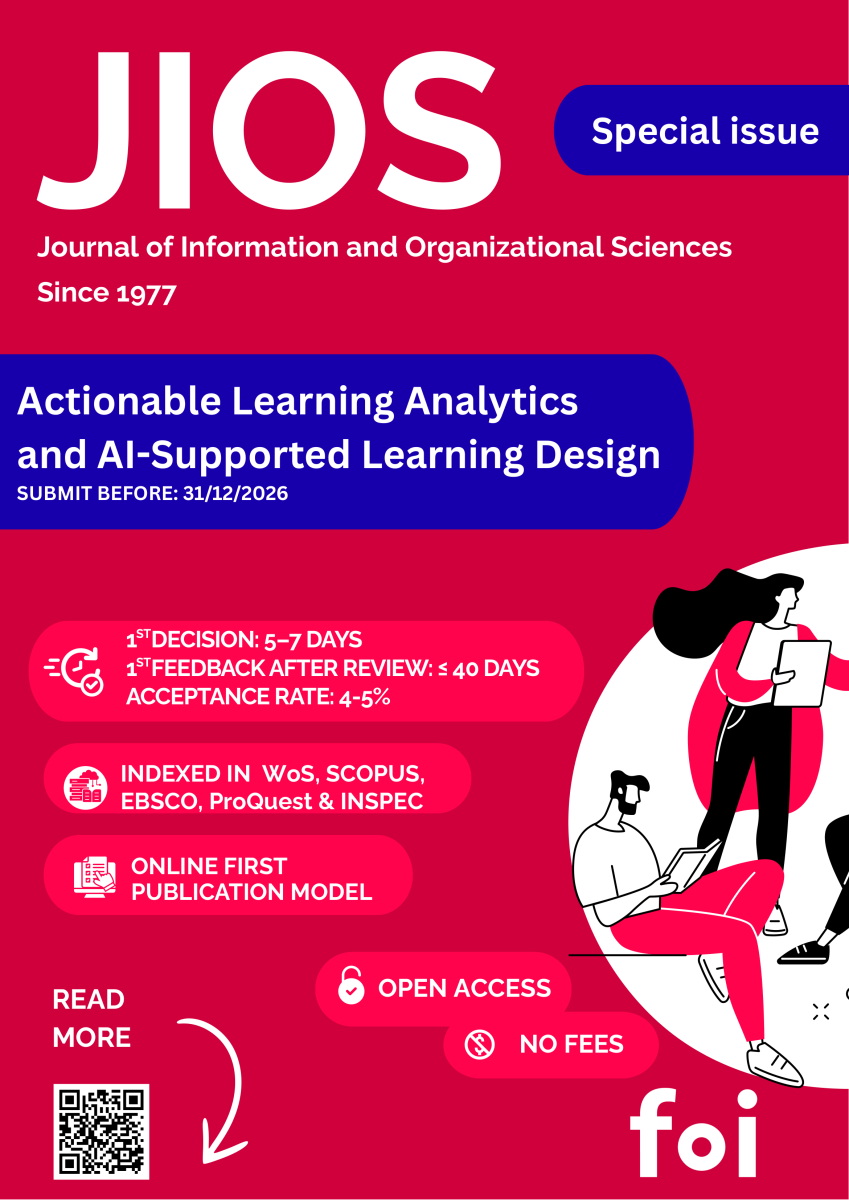
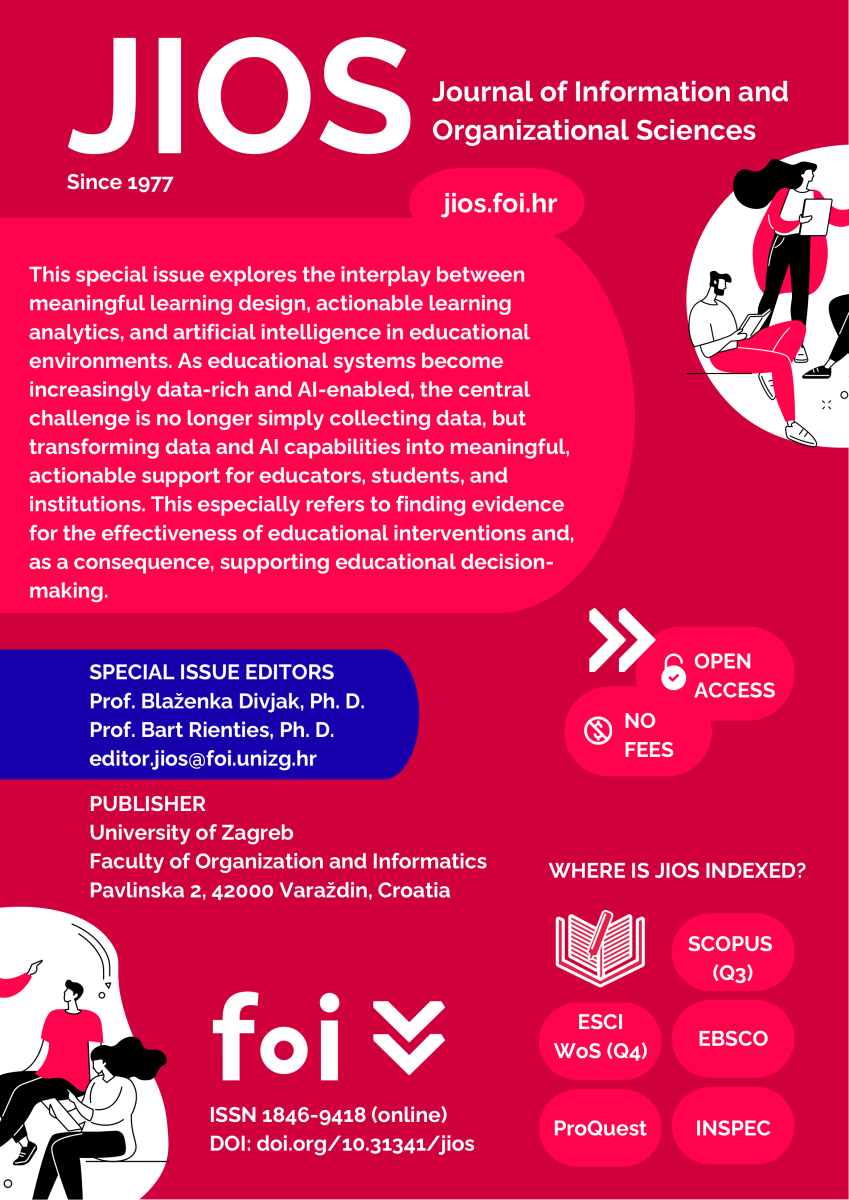
The Special Issue focuses on research that connects learning analytics, artificial intelligence, and learning design with the aim of creating concrete and actionable support for teachers, students, study programme leaders, and educational institutions. The Special Issue is particularly interested in papers that explore how educational data and the potential of artificial intelligence can be transformed into meaningful support for decision-making, the design of educational interventions, curriculum development, assessment, and the improvement of educational processes.
The call is open to conceptual, empirical, methodological, and interdisciplinary papers in the fields of actionable learning analytics, AI-supported learning design, evidence-informed educational decision-making, trustworthy and explainable artificial intelligence in education, student participation and agency, equity and inclusion in the application of artificial intelligence, and the organizational and institutional effects of applying learning analytics and artificial intelligence.
The guest editors of the Special Issue are Prof. Blaženka Divjak, PhD, from the University of Zagreb Faculty of Organization and Informatics, and Prof. Bart Rienties from The Open University, UK.
JIOS is an international peer-reviewed open access journal that has been published continuously since 1977. The journal follows a fully open access model, namely the Diamond Open Access model, which means that authors are not charged any submission, processing, or publication fees. The journal applies a double-blind peer review process, enables rapid publication through the Online First publication model, and is indexed in relevant international databases.
The submission deadline for the Special Issue is 31 December 2026. Papers should be submitted through the JIOS platform, with the Special Issue selected during the submission process.
All valid procedures, rules, and responsibilities prescribed by JIOS for regular journal issues also apply to the submission, evaluation, selection, and publication of papers in the Special Issue.
More information about the Special Issue, topics, and author guidelines is available here.