

The programme began with an informal gathering in the Info Chill Zone, followed by welcome addresses from Prof. Marina Klačmer Čalopa, PhD, Dean of FOI, and Associate Professor Igor Pihir, PhD, President of the AMAC-FOI Association of Alumni, Employees and Friends of the Faculty of Organization and Informatics, who also moderated the panel discussion. The Dean presented the Faculty's current activities and strategic development projects, including the construction of the new FOI 2 campus.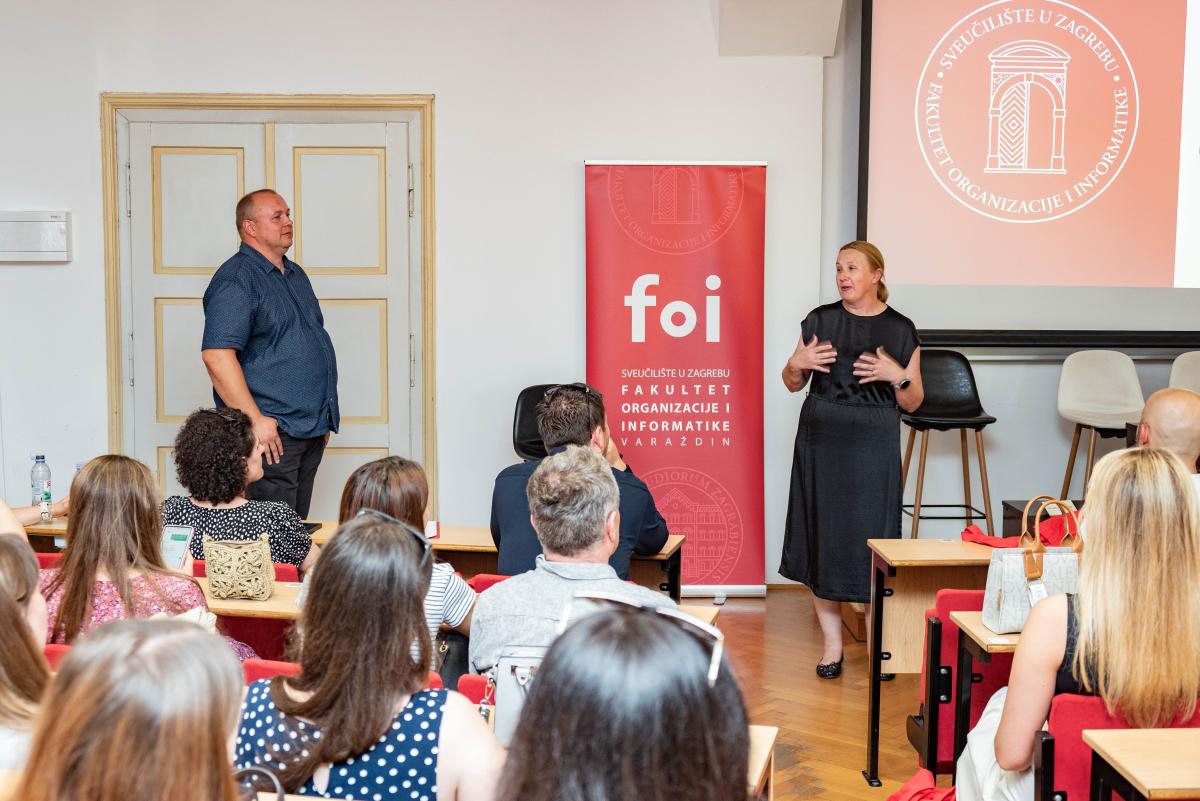
The central part of the event was the panel discussion entitled "My Journey from Enrolling at FOI to Today: Alumni Experiences and the Development of the FOI Community", featuring distinguished FOI alumni from the fields of information technology and economics:
- Enes Muslić, CEO and Consultant, Ragusa Info
- Marija Gradiček, CEO, Fine'sa Consultings
- Monika Bezjak Ćamilov, Team Lead & ERP Consultant, Business Solution Adria
- Domagoj Poljak, CTO, Intis
- Brigita Šalamon, CEO, Efektivaplus
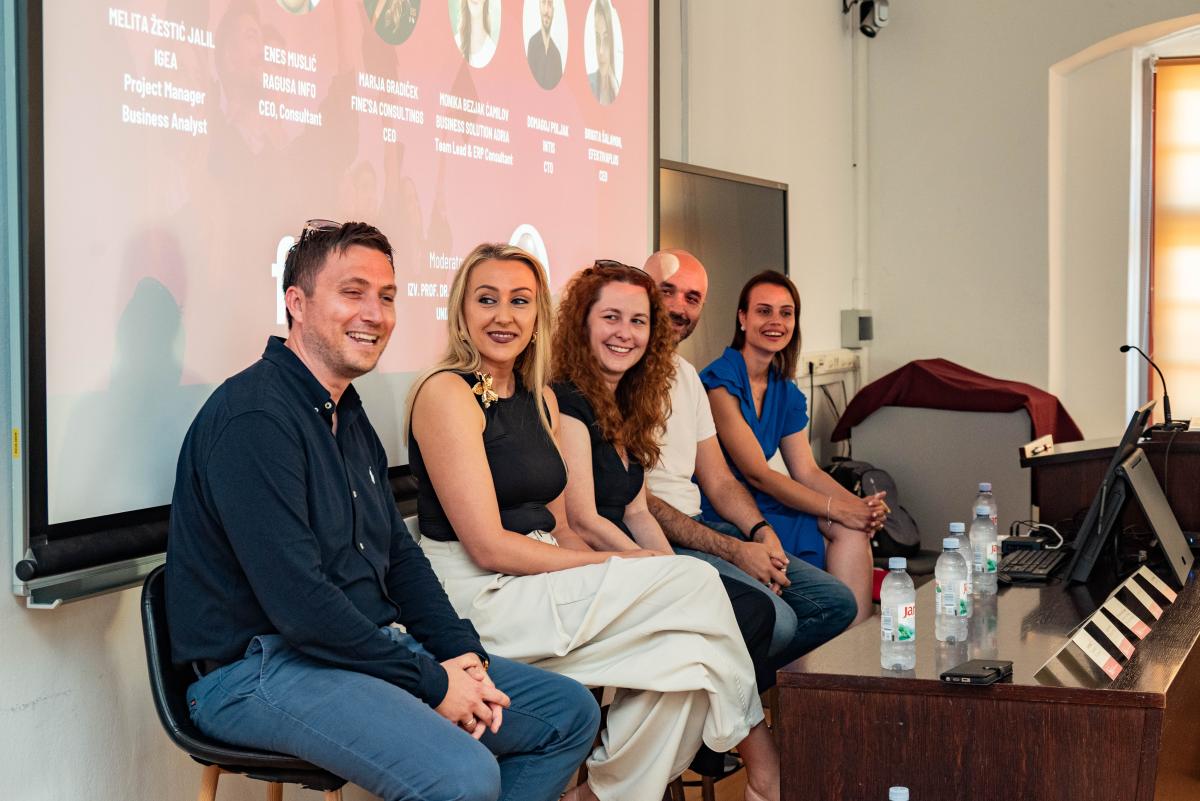
During the discussion, the panellists shared their professional journeys—from their student days at FOI to their current leadership roles in business and entrepreneurship. They emphasized that FOI's interdisciplinary approach had given them a significant competitive advantage throughout their careers. Alumni with economics backgrounds highlighted how their IT knowledge enabled them to better understand modern business processes, while those from IT stressed the importance of economics, organization and management knowledge in leading teams, projects and their own companies.
The panellists agreed that one of FOI's greatest strengths is its ability to integrate different fields of knowledge and develop competencies that help graduates adapt more easily to changes in the labour market. They also noted that the knowledge and skills they acquired at FOI gave them the confidence to make important career decisions, including launching their own entrepreneurial ventures.
The discussion also highlighted the importance of practical learning, working on real business cases and maintaining close ties between students and industry through projects, seminars, internships and cooperation with employers. According to the panellists, this approach enables students to gain valuable practical experience and prepares them well for the labour market. They noted that FOI has successfully fostered this educational model for many years.
Speaking about the future of work, the panellists devoted particular attention to the development of artificial intelligence skills. They emphasized that AI is becoming an indispensable part of business across virtually every sector, while also stressing the importance of critical thinking, the responsible and ethical use of AI technologies, and a thorough understanding of both their capabilities and limitations. They concluded that FOI has the potential to become one of the leading institutions in educating future professionals for the responsible application of artificial intelligence.
In addition to technological competencies, participants highlighted the importance of lifelong learning, continuous professional development, micro-credentials and professional certifications as a natural extension of formal education. Their message to current students was to remain curious, make the most of internship opportunities, international experiences and networking, and continue learning throughout their professional careers.
At the end of the discussion, the panellists emphasized that alumni gatherings such as this are extremely valuable because they strengthen connections between academia and industry, facilitate the exchange of experiences among different generations of FOI graduates, and further reinforce the FOI Alumni community and the sense of belonging to the Faculty.
The event concluded with a group photograph and networking session, followed by informal conversations and discussions about future forms of cooperation between alumni and the Faculty.
FOI Alumni Casual Friday once again confirmed the importance of an active alumni community as a bridge connecting students, alumni, the Faculty and the business sector. It also demonstrated that, regardless of generation or profession, FOI graduates continue to share the same core values—interdisciplinarity, openness to change and a commitment to lifelong learning.